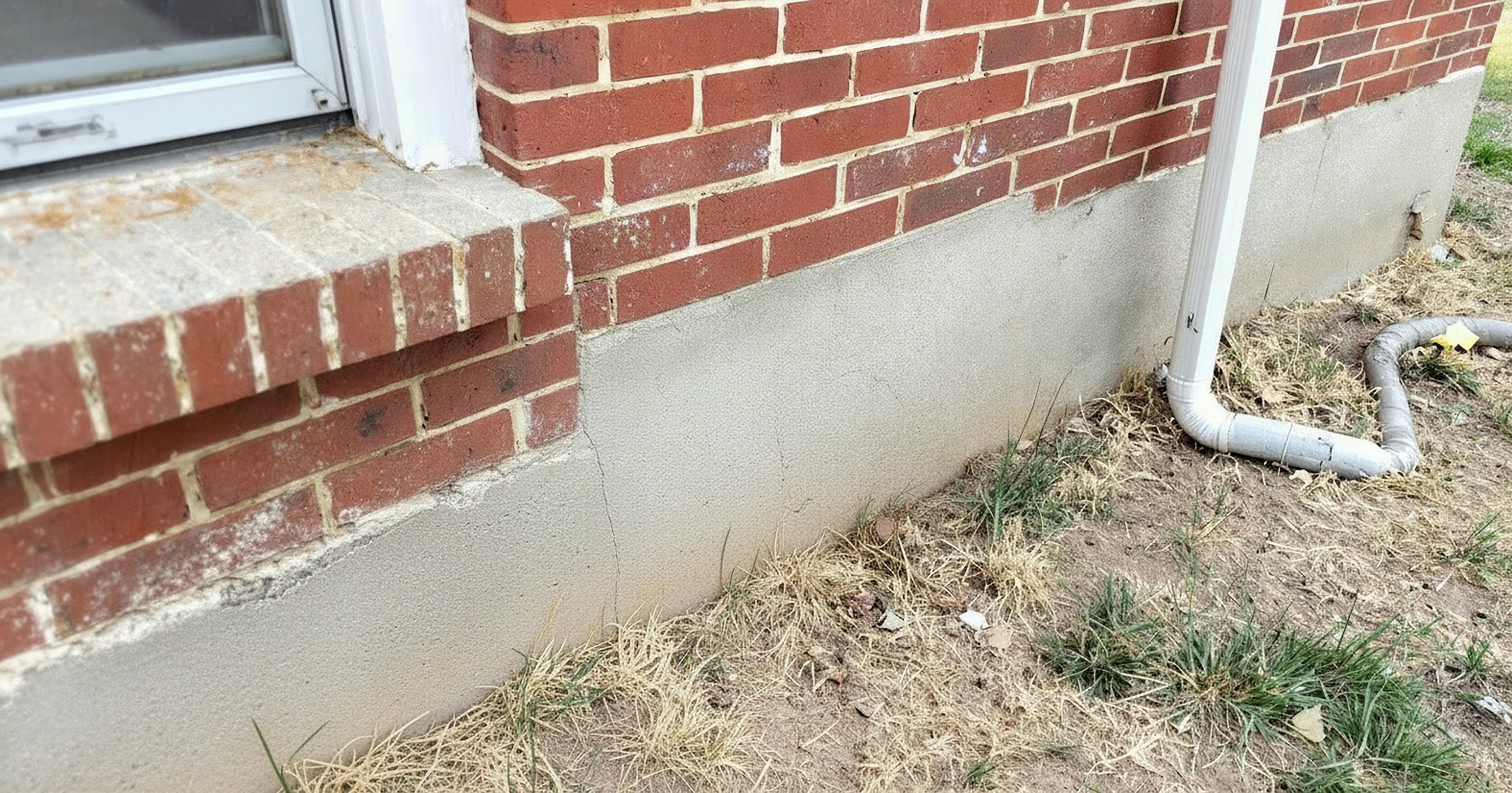
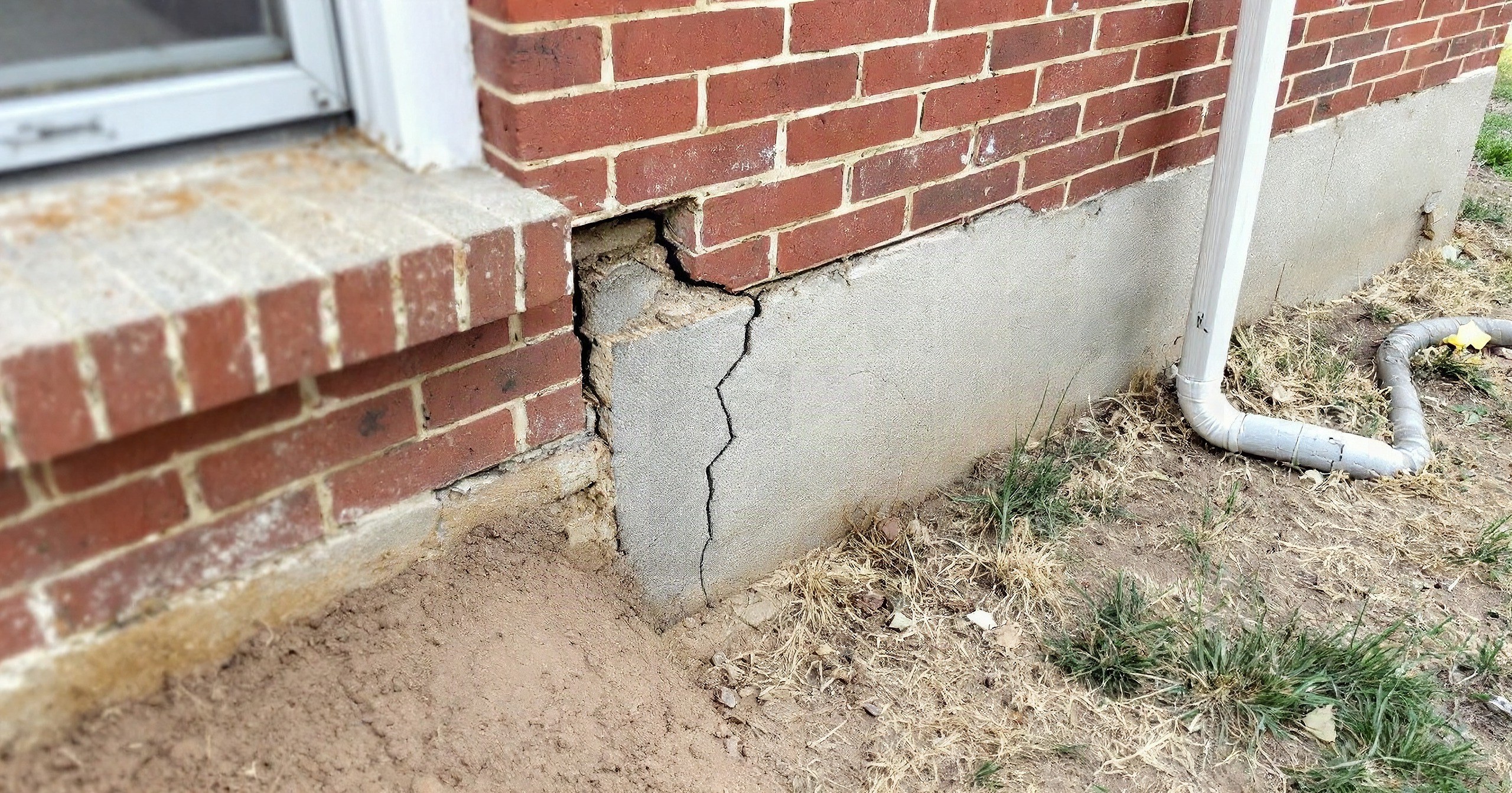
↔ Drag to compare · Illustrative example
Foundation Repair Tulsa:
Stop the Cracks Before They Spread
Oklahoma clay swells with every wet spring and shrinks hard in the summer heat. That movement cracks brick, sticks doors, and slopes floors. A local provider finds the cause and fixes it.
No pressure, no obligation. Call and talk through the job.
Why does Tulsa clay crack foundations?
Green Country sits on expansive clay. It swells when spring storms soak it and shrinks hard through the August drought, and that constant push-pull is what opens stair-step cracks in brick, sticks doors and windows, and slopes floors across the metro.
A local crew sees the difference between a 1920s Brookside pier-and-beam bungalow and a slab-on-grade build in Broken Arrow. They know where each one fails first, what the soil is doing underneath, and which repair actually holds.
The result is a repair matched to the real cause instead of a patch over the symptom. Call (918) 720-0199 and describe what you’re seeing. You get straight answers and a free estimate over the phone.
What foundation problem are you seeing?
Every job starts with a free estimate over the phone, then the crew's on-site inspection that finds the cause, whether it is soil, water, or settling, before any repair is recommended.
Foundation Repair
Cracks, settling, and bowing walls repaired with proven techniques like piering, slabjacking, and wall anchoring, matched to what the inspection actually finds.
See foundation repair →Pier & Beam Repair
Sagging floors and unstable beams corrected with beam replacement, shimming, and leveling to restore structural integrity.
See pier & beam repair →Basement Waterproofing
Interior and exterior waterproofing, sump pump installation, and drainage systems that keep water away from the foundation.
See waterproofing →Crawl Space Repair
Encapsulation, vapor barrier installation, and moisture control that protect the wood structure and improve indoor air quality.
See crawl space repair →Concrete Leveling
Sunken driveways, sidewalks, and floors lifted with polyurethane foam injection. A clean repair instead of a tear-out.
See concrete leveling →Soil Stabilization
Chemical injection and compaction grouting that strengthen the soil under the home and help prevent settling and shifting.
See soil stabilization →What will it cost? Size the job first.
Pick what you’re seeing and size the job for a rough ballpark from national cost-guide data, so you know what to expect before you call. Takes 30 seconds.
Rough estimate from national cost-guide data. Not a fixed price from this company. You get a free estimate over the phone; the crew confirms the exact number on-site.
Benchmarks: most homeowners pay $2,224 to $8,134 for foundation repair, and piering typically runs $1,000 to $3,000 per pier (This Old House); foundation stabilization typically runs $4,000 to $12,000, house releveling $3,000 to $9,500, waterproofing $2,500 to $7,000, and concrete leveling $600 to $1,400 (HomeAdvisor). Here the inspection is free. National averages, so Tulsa jobs can land outside these ballparks.
How does the job actually go?
Tell us what you’re seeing
Call and describe the cracks, the doors that quit latching, the floor that slopes toward the kitchen. You get a free estimate over the phone and a crew visit on the calendar. Not a hard sell.
The cause gets found and fixed
The local provider's crew inspects the foundation, finds what the soil is doing underneath, and repairs it with the right method. Piering, shimming, leveling, or drainage.
You look it over
Walk the finished job before the crew leaves. All repairs are
Why call Tulsa Foundation Pros?
Why Tulsa soil matters
Expansive Green Country clay swells with spring rain and shrinks in August heat. Foundations here fail in patterns, and a proper inspection reads them quickly.
Your call gets answered
No 1-800 runaround, no out-of-state routing. Call now and you will get a straight answer on what it takes.
Right repair, every foundation type
Slab homes get piering and slabjacking. Pier-and-beam homes get beam replacement, shimming, and leveling. Wet basements get real drainage. The method matches the foundation, not a one-size pitch.
Honest about results
If a hairline crack is cosmetic and doesn’t need structural repair, you’ll hear that at the inspection. Straight answers beat a change order.
Look it over before the crew leaves
Walk the finished job and flag anything that needs another look while the crew is still on site.
Service area
From midtown bungalows in Brookside and Maple Ridge out to newer slab builds in Broken Arrow, Bixby, Jenks, and Owasso. If you are in the Tulsa metro, you are in the service area. A 1930s pier-and-beam home settles differently than new construction on the edge of town, and the repair plan accounts for it.
What should you read before you call?
Most people want two answers before they pick up the phone: is this serious, and what is it going to involve. Start with the warning signs guide if you are trying to work out whether a crack matters, then the slab versus pier and beam guide, which settles in about two minutes which kind of foundation you are standing on and therefore which repair applies. The cost guide sets out published national market ranges by repair type with their sources.
If nothing is wrong yet, how to prevent foundation problems is the drainage and grading checklist that keeps the clay under the house from swinging between saturated and bone dry. When you are ready for a look at the house, what happens during a foundation inspection walks through the visit and what a fair estimate itemizes. And if the house in question is one you are buying or selling, buying a Tulsa home with foundation repair covers the paperwork to ask for.
Frequently asked
Common questions from Tulsa homeowners and property managers.
What does foundation repair cost for a Tulsa home?
What are the warning signs of foundation problems?
What causes foundation problems in Tulsa?
Does a small foundation crack really matter?
How long does a foundation repair job take from start to finish?
Can I stay in the house while the crew works?
Who sets the warranty on the finished work?
What is the difference between slab and pier-and-beam repair?
What areas around Tulsa do you cover?
How do I get a free foundation estimate?
What does the crew's on-site inspection include?
When is the best time of year to fix a foundation?
Do you handle wet basements as well as cracked slabs?
What should I have ready before the inspection?
Does foundation movement damage plumbing or drywall?
How often should a Tulsa foundation be checked?
Do you level sunken driveways and sidewalks?
What happens if I do nothing about a foundation crack?
Does a wet crawl space need to be fixed at the same time?
How do I book the work once I have a number?
What needs repair at your place?
No obligation. Prefer to talk it through? Call (918) 720-0199.
Fastest way to get answers: call.
Describe the cracks, the sticking doors, or the water. Then get a free estimate over the phone; the crew inspects on-site before any work starts. Straight answers, no hard sell.